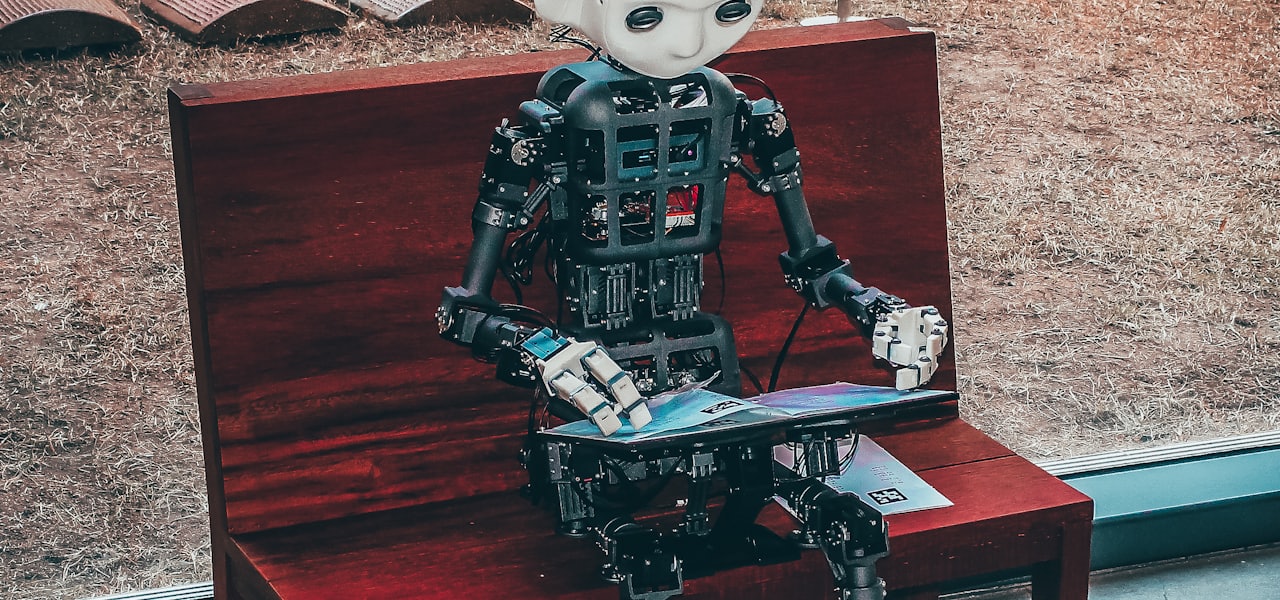
Data augmentation is a statistical technique which allows maximum likelihood estimation from incomplete data. Data augmentation has important applications in Bayesian analysis, and the technique is widely used in machine learning to reduce overfitting when training machine learning models, achieved by training models on several slightly-modified copies of existing data. == Synthetic oversampling techniques for traditional machine learning == Synthetic Minority Over-sampling Technique (SMOTE) is a method used to address imbalanced datasets in machine learning. In such datasets, the number of samples in different classes varies significantly, leading to biased model performance. For example, in a medical diagnosis dataset with 90 samples representing healthy individuals and only 10 samples representing individuals with a particular disease, traditional algorithms may struggle to accurately classify the minority class. SMOTE rebalances the dataset by generating synthetic samples for the minority class. For instance, if there are 100 samples in the majority class and 10 in the minority class, SMOTE can create synthetic samples by randomly selecting a minority class sample and its nearest neighbors, then generating new samples along the line segments joining these neighbors. This process helps increase the representation of the minority class, improving model performance. == Data augmentation for image classification == When convolutional neural networks grew larger in mid-1990s, there was a lack of data to use, especially considering that some part of the overall dataset should be spared for later testing. It was proposed to perturb existing data with affine transformations to create new examples with the same labels, which were complemented by so-called elastic distortions in 2003, and the technique was widely used as of 2010s. Data augmentation can enhance CNN performance and acts as a countermeasure against CNN profiling attacks. Data augmentation has become fundamental in image classification, enriching training dataset diversity to improve model generalization and performance. The evolution of this practice has introduced a broad spectrum of techniques, including geometric transformations, color space adjustments, and noise injection. === Geometric Transformations === Geometric transformations alter the spatial properties of images to simulate different perspectives, orientations, and scales. Common techniques include: Affine Transformation Rotation: Rotating images by a specified degree to help models recognize objects at various angles. Reflection: Reflecting images horizontally or vertically to introduce variability in orientation. Translation: Shifting images in different directions to teach models positional invariance. Scaling Shear Mapping Cropping: Removing sections of the image to focus on particular features or simulate closer views. Elastic Distortion Morphing within the same class: Generating new samples by applying morphing techniques between two images belonging to the same class, thereby increasing intra-class diversity. === Color Space Transformations === Color space transformations modify the color properties of images, addressing variations in lighting, color saturation, and contrast. Techniques include: Brightness Adjustment: Varying the image's brightness to simulate different lighting conditions. Contrast Adjustment: Changing the contrast to help models recognize objects under various clarity levels. Saturation Adjustment: Altering saturation to prepare models for images with diverse color intensities. Color Jittering: Randomly adjusting brightness, contrast, saturation, and hue to introduce color variability. === Noise Injection === Injecting noise into images simulates real-world imperfections, teaching models to ignore irrelevant variations. Techniques involve: Gaussian Noise: Adding Gaussian noise mimics sensor noise or graininess. Salt and Pepper Noise: Introducing black or white pixels at random simulates sensor dust or dead pixels. == Data augmentation for signal processing == Residual or block bootstrap can be used for time series augmentation. === Biological signals === Synthetic data augmentation is of paramount importance for machine learning classification, particularly for biological data, which tend to be high dimensional and scarce. The applications of robotic control and augmentation in disabled and able-bodied subjects still rely mainly on subject-specific analyses. Data scarcity is notable in signal processing problems such as for Parkinson's Disease Electromyography signals, which are difficult to source - Zanini, et al. noted that it is possible to use a generative adversarial network (in particular, a DCGAN) to perform style transfer in order to generate synthetic electromyographic signals that corresponded to those exhibited by sufferers of Parkinson's Disease. The approaches are also important in electroencephalography (brainwaves). Wang, et al. explored the idea of using deep convolutional neural networks for EEG-Based Emotion Recognition, results show that emotion recognition was improved when data augmentation was used. A common approach is to generate synthetic signals by re-arranging components of real data. Lotte proposed a method of "Artificial Trial Generation Based on Analogy" where three data examples x 1 , x 2 , x 3 {\displaystyle x_{1},x_{2},x_{3}} provide examples and an artificial x s y n t h e t i c {\displaystyle x_{synthetic}} is formed which is to x 3 {\displaystyle x_{3}} what x 2 {\displaystyle x_{2}} is to x 1 {\displaystyle x_{1}} . A transformation is applied to x 1 {\displaystyle x_{1}} to make it more similar to x 2 {\displaystyle x_{2}} , the same transformation is then applied to x 3 {\displaystyle x_{3}} which generates x s y n t h e t i c {\displaystyle x_{synthetic}} . This approach was shown to improve performance of a Linear Discriminant Analysis classifier on three different datasets. Current research shows great impact can be derived from relatively simple techniques. For example, Freer observed that introducing noise into gathered data to form additional data points improved the learning ability of several models which otherwise performed relatively poorly. Tsinganos et al. studied the approaches of magnitude warping, wavelet decomposition, and synthetic surface EMG models (generative approaches) for hand gesture recognition, finding classification performance increases of up to +16% when augmented data was introduced during training. More recently, data augmentation studies have begun to focus on the field of deep learning, more specifically on the ability of generative models to create artificial data which is then introduced during the classification model training process. In 2018, Luo et al. observed that useful EEG signal data could be generated by Conditional Wasserstein Generative Adversarial Networks (GANs) which was then introduced to the training set in a classical train-test learning framework. The authors found classification performance was improved when such techniques were introduced. === Mechanical signals === The prediction of mechanical signals based on data augmentation brings a new generation of technological innovations, such as new energy dispatch, 5G communication field, and robotics control engineering. In 2022, Yang et al. integrate constraints, optimization and control into a deep network framework based on data augmentation and data pruning with spatio-temporal data correlation, and improve the interpretability, safety and controllability of deep learning in real industrial projects through explicit mathematical programming equations and analytical solutions.
Act! LLC
ACT! (previously known as Activity Control Technology, Automated Contact Tracking, ACT! by Sage, and Sage ACT!) is a customer relationship management and marketing automation software platform designed for small and medium-sized businesses. It has over 2.8 million registered users as of December 2014. == History == The company Conductor Software was founded in 1986, in Dallas, Texas, by Pat Sullivan and Mike Muhney. The original name for the software was Activity Control Technology; it was renamed to Automated Contact Tracking, later abbreviated to ACT. The name of the company was subsequently changed to Contact Software International and it was sold in 1993 to Symantec Corporation, who in 1999 then sold it to SalesLogix. The Sage Group purchased Interact Commerce (formerly SalesLogix) in 2001 through Best Software, then its North American software division. Swiftpage acquired it in 2013. Beginning with the 2006 version, the name was styled ACT! by Sage, and in 2010 revised to Sage ACT!. Following its 2013 acquisition by Swiftpage, it was renamed to ACT! Swiftpage. In May 2018, ACT! was sold to SFW Advisors. In December 2018, Kuvana, a marketing automation software solution, was acquired by SFW and merged with ACT! This add-on is now a complementary service to the core CRM solution. In December 2019, ACT! hired Steve Oriola as chairman and CEO. In 2020, Swiftpage changed its company name to ACT!. In March 2023, ACT! hired Bruce Reading as President and CEO. == Software == ACT! features include contact, company and opportunity management, a calendar, marketing automation and e-marketing tools, reports, interactive dashboards with graphical visualizations, and the ability to track prospective customers. ACT! integrates with Microsoft Word, Excel, Outlook, Google Contacts, Gmail, and other applications via Zapier. For custom integrations, ACT! has an in-built API. ACT! can be accessed from Windows desktops (Win7 and later) with local or network shared database; synchronized to laptops or remote officers; Citrix or Remote Desktop; Web browsers (Premium only) with self or SaaS hosting; smartphones and tablets via HTML5 Web (Premium only); smartphones and tablets via sync with Handheld Contact.
Web application
A web application (or web app) is application software that is created with web technologies and runs via a web browser. Web applications emerged during the late 1990s and allowed for the server to dynamically build a response to the request, in contrast to static web pages. Web applications are commonly distributed via a web server. There are several different tier systems that web applications use to communicate between the web browsers, the client interface, and server data. Each system has its own uses as they function in different ways. However, there are many security risks that developers must be aware of during development; proper measures to protect user data are vital. Web applications are often constructed with the use of a web application framework. Single-page applications (SPAs) and progressive web apps (PWAs) are two architectural approaches to creating web applications that provide a user experience similar to native apps, including features such as smooth navigation, offline support, and faster interactions. Web applications are often fully hosted on remote cloud services, can require a constant connection to them, and can replace conventional desktop applications for operating systems such as Microsoft Windows, thus facilitating the operation of software as a service as it grants the developer the power to tightly control billing based on use of the remote services as well as vendor lock-in by hosting data remotely. Modern browsers such as Chrome offer sandboxing for every browser tab which improves security and restricts access to local resources. No software installation is required as the app runs within the browser which reduces the need for managing software installations. With the use of remote cloud services, customers do not need to manage servers as that can be left to the developer and the cloud service and can use the software with a relatively low power, low-resource PC such as a thin client. The source code of the application can stay the same across operating systems and devices of users with the use of responsive web design, since it only needs to be compatible with web browsers which adhere to web standards, making the code highly portable and saving on development time. Numerous JavaScript frameworks and CSS frameworks facilitate development. == History == The concept of a "web application" was first introduced in the Java language in the Servlet Specification version 2.2, which was released in 1999. At that time, both JavaScript and XML had already been developed, but the XMLHttpRequest object had only been recently introduced on Internet Explorer 5 as an ActiveX object. Beginning around the early 2000s, applications such as "Myspace (2003), Gmail (2004), Digg (2004), [and] Google Maps (2005)," started to make their client sides more and more interactive. A web page script is able to contact the server for storing/retrieving data without downloading an entire web page. The practice became known as Ajax in 2005. Eventually this was replaced by web APIs using JSON, accessed via JavaScript asynchronously on the client side. In earlier computing models like client-server, the processing load for the application was shared between code on the server and code installed on each client locally. In other words, an application had its own pre-compiled client program which served as its user interface and had to be separately installed on each user's personal computer. An upgrade to the server-side code of the application would typically also require an upgrade to the client-side code installed on each user workstation, adding to the support cost and decreasing productivity. Additionally, both the client and server components of the application were bound tightly to a particular computer architecture and operating system, which made porting them to other systems prohibitively expensive for all but the largest applications. Later, in 1995, Netscape introduced the client-side scripting language called JavaScript, which allowed programmers to add dynamic elements to the user interface that ran on the client side. Essentially, instead of sending data to the server in order to generate an entire web page, the embedded scripts of the downloaded page can perform various tasks such as input validation or showing/hiding parts of the page. "Progressive web apps", the term coined by designer Frances Berriman and Google Chrome engineer Alex Russell in 2015, refers to apps taking advantage of new features supported by modern browsers, which initially run inside a web browser tab but later can run completely offline and can be launched without entering the app URL in the browser. == Structure == Traditional PC applications are typically single-tiered, residing solely on the client machine. In contrast, web applications inherently facilitate a multi-tiered architecture. Though many variations are possible, the most common structure is the three-tiered application. In its most common form, the three tiers are called presentation, application and storage. The first tier, presentation, refers to a web browser itself. The second tier refers to any engine using dynamic web content technology (such as ASP, CGI, ColdFusion, Dart, JSP/Java, Node.js, PHP, Python or Ruby on Rails). The third tier refers to a database that stores data and determines the structure of a user interface. Essentially, when using the three-tiered system, the web browser sends requests to the engine, which then services them by making queries and updates against the database and generates a user interface. The 3-tier solution may fall short when dealing with more complex applications, and may need to be replaced with the n-tiered approach; the greatest benefit of which is how business logic (which resides on the application tier) is broken down into a more fine-grained model. Another benefit would be to add an integration tier, which separates the data tier and provides an easy-to-use interface to access the data. For example, the client data would be accessed by calling a "list_clients()" function instead of making an SQL query directly against the client table on the database. This allows the underlying database to be replaced without making any change to the other tiers. There are some who view a web application as a two-tier architecture. This can be a "smart" client that performs all the work and queries a "dumb" server, or a "dumb" client that relies on a "smart" server. The client would handle the presentation tier, the server would have the database (storage tier), and the business logic (application tier) would be on one of them or on both. While this increases the scalability of the applications and separates the display and the database, it still does not allow for true specialization of layers, so most applications will outgrow this model. == Security == Security breaches on these kinds of applications are a major concern because it can involve both enterprise information and private customer data. Protecting these assets is an important part of any web application, and there are some key operational areas that must be included in the development process. This includes processes for authentication, authorization, asset handling, input, and logging and auditing. Building security into the applications from the beginning is sometimes more effective and less disruptive in the long run. == Development == Writing web applications is simplified with the use of web application frameworks. These frameworks facilitate rapid application development by allowing a development team to focus on the parts of their application which are unique to their goals without having to resolve common development issues such as user management. In addition, there is potential for the development of applications on Internet operating systems, although currently there are not many viable platforms that fit this model.
Fuse Mediation Router
Fuse Mediation Router is an open source tool for integrating services using Enterprise Integration Patterns based on Apache Camel for use in enterprise IT organizations. It is certified, productized and fully supported by the people who wrote the code. Fuse Mediation Router uses a standard method of notation to go from diagram to implementation without coding. Fuse Mediation Router is a rule-based routing and process mediation engine that combines the ease of basic POJO development with the clarity of the standard Enterprise Integration Patterns. It can be deployed inside any container or be used stand-alone, and works directly with any kind of transport or messaging model to rapidly integrate existing services and applications. Fuse Mediation Router is now a part of Red Hat JBoss Fuse. == Tooling == FuseSource offers graphical, Eclipse-based tooling for Apache Camel for download.
Content Security Policy
Content Security Policy (CSP) is a computer security standard introduced to prevent cross-site scripting (XSS), clickjacking and other code injection attacks resulting from execution of malicious content in the trusted web page context. It is a Candidate Recommendation of the W3C working group on Web Application Security, widely supported by modern web browsers. CSP provides a standard method for website owners to declare approved origins of content that browsers should be allowed to load on that website—covered types are JavaScript, CSS, HTML frames, web workers, fonts, images, embeddable objects such as Java applets, ActiveX, audio and video files, and other HTML5 features. == Status == The standard, originally named Content Restrictions, was proposed by Robert Hansen in 2004, first implemented in Firefox 4 and quickly picked up by other browsers. Version 1 of the standard was published in 2012 as W3C candidate recommendation and quickly with further versions (Level 2) published in 2014. As of 2023, the draft of Level 3 is being developed with the new features being quickly adopted by the web browsers. The following header names are in use as part of experimental CSP implementations: Content-Security-Policy – standard header name proposed by the W3C document. Google Chrome supports this as of version 25. Firefox supports this as of version 23, released on 6 August 2013. WebKit supports this as of version 528 (nightly build). Chromium-based Microsoft Edge support is similar to Chrome's. X-WebKit-CSP – deprecated, experimental header introduced into Google Chrome, Safari and other WebKit-based web browsers in 2011. X-Content-Security-Policy – deprecated, experimental header introduced in Gecko 2 based browsers (Firefox 4 to Firefox 22, Thunderbird 3.3, SeaMonkey 2.1). A website can declare multiple CSP headers, also mixing enforcement and report-only ones. Each header will be processed separately by the browser. CSP can also be delivered within the HTML code using a meta tag, although in this case its effectiveness will be limited. Internet Explorer 10 and Internet Explorer 11 also support CSP, but only sandbox directive, using the experimental X-Content-Security-Policy header. A number of web application frameworks support CSP, for example AngularJS (natively) and Django (middleware). Instructions for Ruby on Rails have been posted by GitHub. Web framework support is however only required if the CSP contents somehow depend on the web application's state—such as usage of the nonce origin. Otherwise, the CSP is rather static and can be delivered from web application tiers above the application, for example on load balancer or web server. === Bypasses === In December 2015 and December 2016, a few methods of bypassing 'nonce' allowlisting origins were published. In January 2016, another method was published, which leverages server-wide CSP allowlisting to exploit old and vulnerable versions of JavaScript libraries hosted at the same server (frequent case with CDN servers). In May 2017 one more method was published to bypass CSP using web application frameworks code. == Mode of operation == If the Content-Security-Policy header is present in the server response, a compliant client enforces the declarative allowlist policy. One example goal of a policy is a stricter execution mode for JavaScript in order to prevent certain cross-site scripting attacks. In practice this means that a number of features are disabled by default: Inline JavaScript code